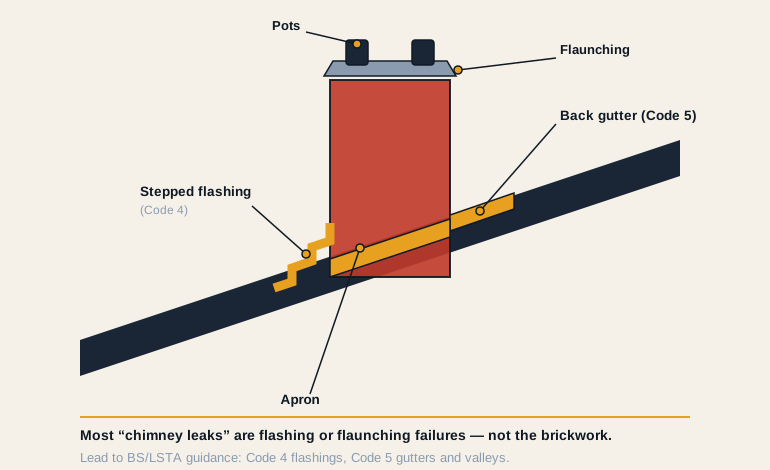
Lead weatherproofs every junction on a roof. When it fails, water finds the gap fast, especially on Malvern's exposed slopes.
The Malvern Wells Factor in Leadwork
Nail fatigue is the defining problem: the iron nails holding the original Welsh slate are corroding through, so slates slip after every gale and section re-slating is the honest answer more often here than anywhere. On the villas along Wells Road in particular, that is the fault we are called to most, and it is worth knowing what drives it before you pay anyone to fix it: the symptom you can see from the ground is rarely the whole story, and a Malvern Wells leadwork quote that skips a proper look is guessing.
Materials and consent: Parts of Malvern Wells carry conservation status, and matching original Welsh slate is frequently required. We work to that from the survey onward, so your leadwork both looks right and keeps you the right side of the planners — there is no point saving on materials only to be told to redo the work to match the Malvern Wells streetscape.
Every Malvern Wells leadwork job is a little different, and the reason is local. Malvern Wells is the high, exposed shoulder of the hills, where the roofs take the full weather and the plots are the steepest we work on. Victorian and Edwardian villas line the Wells Road and the Wyche, many with original Welsh slate now firmly at nail-fatigue age, on some of the steepest plots in the district. You see it clearly around the Peachfield Road area, where the roofs tell you the era of the street at a glance.
We carry reclaimed and matched Welsh slate specifically for the Wells Road villas, because sourcing the right slate is half the job up here. That local knowledge is the difference between a Malvern Wells leadwork job that lasts and one that has you calling someone back in two winters. It is also why we would rather turn down a job we cannot do properly than take it on and cut a corner the Malvern Wells weather will find.
Split-level hillside plots mean scaffold complexity and long access before any tiling starts; a Wells Road job carries more scaffold cost than the same roof on flat ground. High on the eastern flank of the hills, Malvern Wells takes accelerated wind and the heaviest tree-canopy moss in the district. Both of those feed directly into what your leadwork should cost and how long it takes, which is why we survey the actual property near the Wyche Cutting rather than quoting from a national rate card — two houses a few streets apart in Malvern Wells can need genuinely different work, and pricing them the same helps nobody.
All of this shows up in the price. A leadwork quote for a property on the Peachfield Road area will not match one for a different era of house two streets away, because nail fatigue in the original Welsh slate and the access it needs are what actually drive the cost here. We would rather show you an itemised Malvern Wells quote you can question line by line than a round number that hides where the money goes.
On the day in Malvern Wells: for leadwork here, scaffold is specified where the job involves chimney lead, high-level valleys and any junction needing safe standing time, and where a tower or roof ladder is safe we use that instead to keep the cost and disruption down. Any pavement scaffold or skip licence goes through Malvern Hills District Council, which we arrange, and we plan it around Malvern Wells’s access. You get a clear start date, a tidy site at the end of each day, and no surprise access charge appearing after work has begun — the single most common complaint we hear about the last firm someone used.
Do you cover all of Malvern Wells?
Yes — we cover Malvern Wells in full, from the Wyche Cutting across to the surrounding streets, and we know the local stock well enough to price leadwork accurately before we arrive.
What makes Malvern Wells roofs different for leadwork?
The local factor that matters most is nail fatigue in the original Welsh slate, and it is made worse because the high, exposed slopes take accelerated wind. Knowing both is how we quote Malvern Wells work fairly rather than off a national average.